Workshop on Regenerative Science & Methodology of Research Practice : 18-19 May’26
An event of AIESS Centre
Workshop on Regenerative Science & Methodology of Research Practice
An initiative Regenerative Futures Lab
The first Faculty Workshop on Regenerative Science and Methodology
18th – 19th May 2026
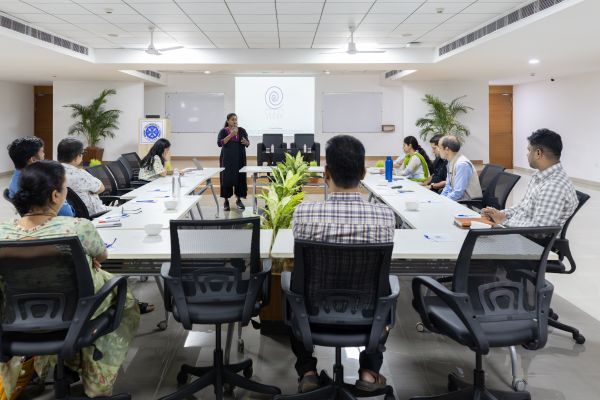
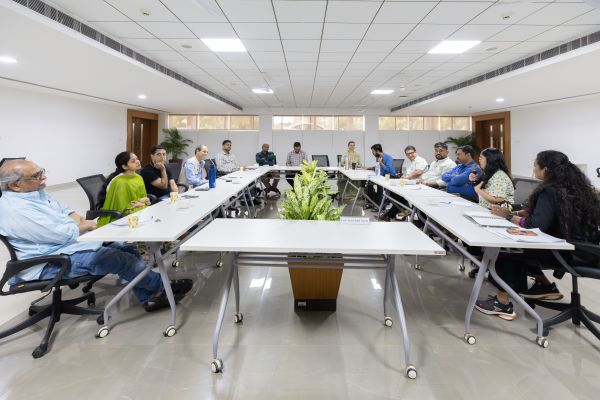
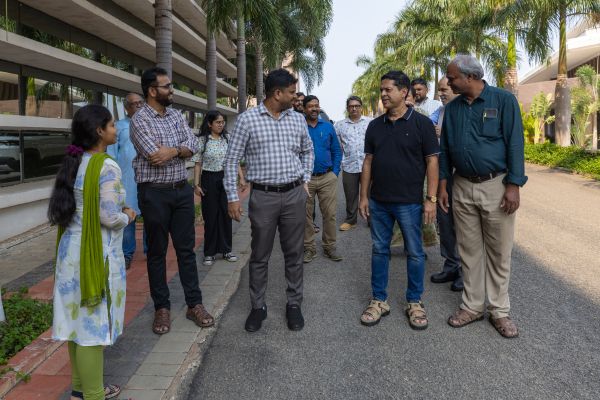
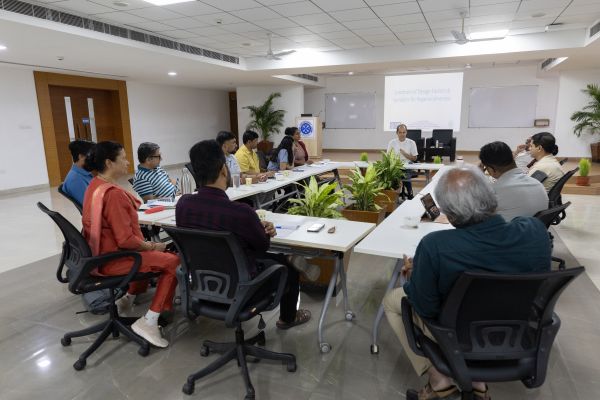
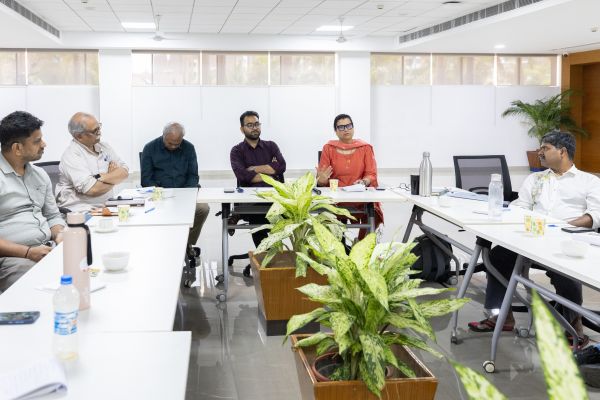
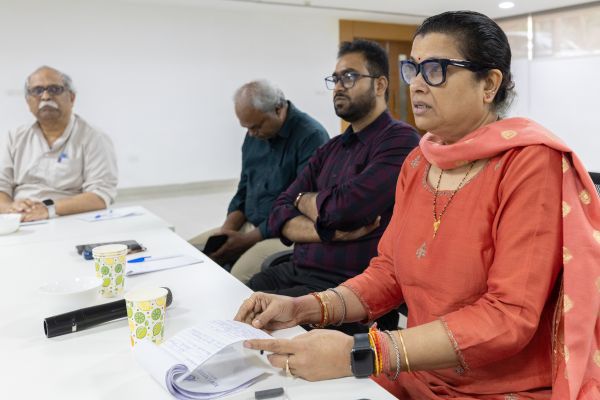
The 2nd Faculty Workshop (18-19 May, 2026) on Regenerative Science & Methodology of Research Practice, organized by the AIESS Centre under the Regenerative Futures Lab, deepened regenerative dialogue through reflection, interconnectedness, and collective responsibility. Through immersive activities, emotional mapping, systems thinking, and other-centric inquiry, participants reimagined education, research, and coexistence as pathways toward regenerative transformation and meaningful collective futures.
Day 1: 18th May, 2026
Connecting the three pillars (Reflect → Rebuild → Reconnect)
The 2nd Faculty Workshop is not a sequel. It is a continuation of a living conversation — one that began with curiosity and has now evolved into collective commitment. What started as the enthusiasm of an academician has attracted not only furacademic engagement is gradually transforming into a movement of regenerative thinking among educators who no longer wish to teach only for outcomes, but for renewal, resilience, and meaningful impact. This Workshop recognizes that education today must move beyond sustainability toward regeneration — creating systems that heal, restore, and continuously evolve. The increasing participation and interest of faculty members demonstrate an inspiring readiness to rethink pedagies, redesign learning ecosystems, and reimagine the role of educators as catalysts of transformation.
Collective Responsibility in Research and Human Endeavors
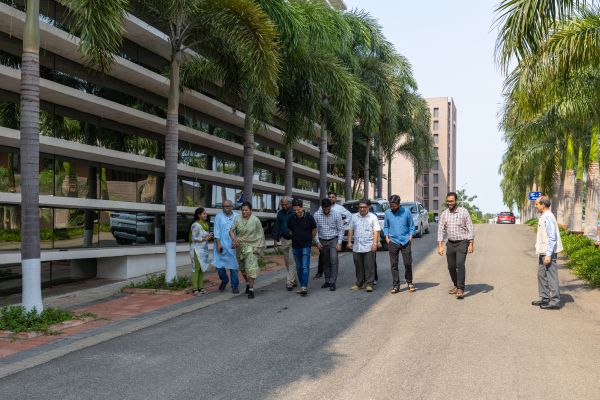
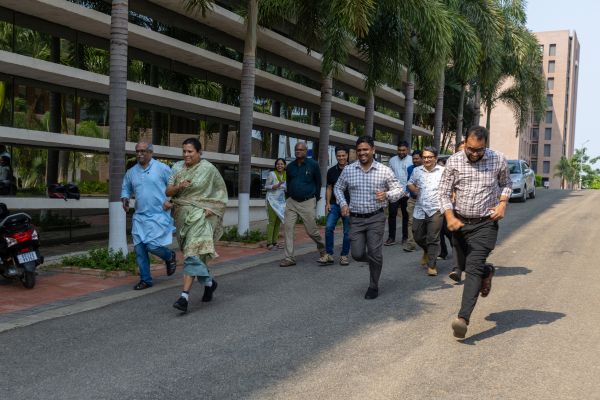
A deliberation on ontology, epistemology, logic, and axiology underscores the significance of research methodology and the methods employed. The philosophical positioning of the self is illustrated through a race in which participants are asked to run both individually and collectively. Racing against oneself and racing alongside others reveal fundamentally different experiences. This exercise conveys the principle that a chain is only as strong as its weakest link, emphasizing that collective responsibility requires supporting the most vulnerable members of the human chain. Although such an approach may not always secure a first-place finish, it ensures inclusivity, prevents disqualification, and protects future interests by mitigating potential loss.
Regenerative Coexistence in a Joint Probabilistic Reality
Day 1 concluded with moments of deep self-reflection, encouraging participants to activate a more conscious and interconnected mode of thinking. It invited individuals to align themselves with the core philosophical understanding of a joint probabilistic reality — where the strength and success of the whole emerge from the collective contribution and interdependence of individual elements. Just as a single element with zero probability can reduce the outcome of the entire system to zero, the session emphasized that exclusion, disengagement, or weakness in one part can lead to failure of the whole, reinforcing the importance of collective responsibility and regenerative coexistence. It closed with a call to envision futures built not on competition alone, but on solidarity, where resilience is nurtured by inclusivity and the safeguarding of every participant ensures that progress is both sustainable and shared.
Day 2: 19th May, 2026
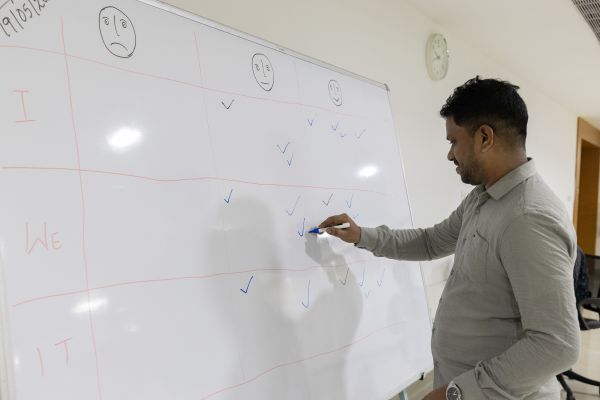
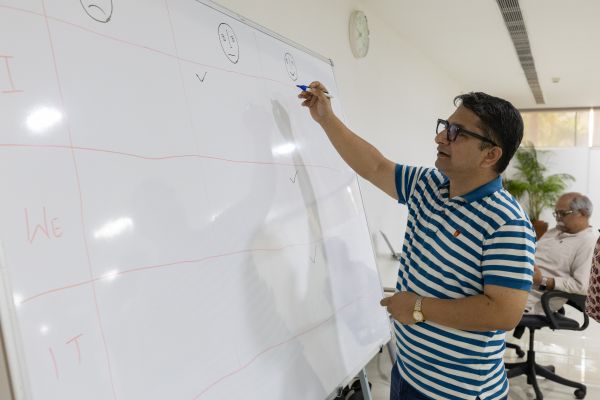
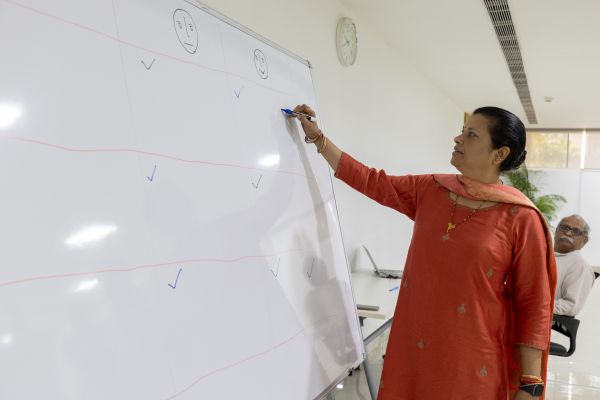
Day 2 began with a mood-board activity where participants mapped themselves onto a reflective 3×3 matrix of I, We, and It — exploring “How am I feeling today?”, “What am I feeling about them?”, and “What am I feeling about us?” across the emotional spectrum of bad, neutral, and good. The exercise encouraged emotional awareness, relational reflection, and collective sense-making, setting the tone for a day centered on interconnectedness, empathy, and regenerative engagement.
Untangle the Tangle
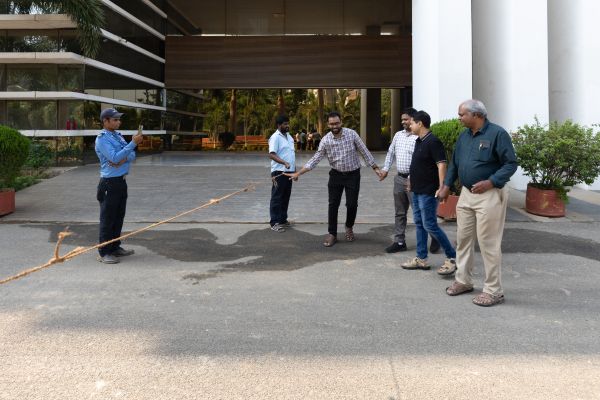
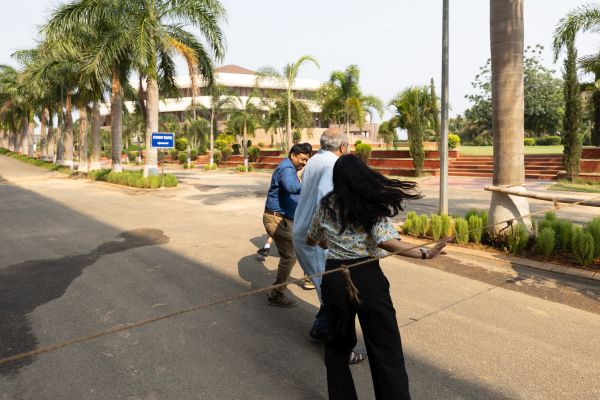
The activity explored how perspectives shape problem-solving through three designed situations involving a human tangle. In the first situation, participants created a tangle while an external “untangler,” guided with prior instructions, took nearly five minutes to resolve it. In the second, experienced participants repeated the activity with a different untangler, reducing the resolution time to 2 minutes and 25 seconds. In the final situation, the tangled participants themselves untangled the formation in just 26 seconds. The exercise highlighted a powerful insight: when solutions are sought externally, resolution often takes longer, whereas recognizing the capacity for resolution within oneself and within the system enables faster, more organic transformation.
Contours of Other-Centrism: Reflection, Relations & Regeneration
Understanding the concept of other-centrism through both etic and emic perspectives, participants were exposed to a broad spectrum of factors, variables, and indicators that shape human perception, interaction, and collective existence. The session encouraged deep self-reflection and critical contemplation, gradually moving toward the closure of the workshop while simultaneously opening pathways to new questions, inner inquiry, and thought-provoking reflections on self, systems, and regenerative coexistence.
A Portrait of Interconnectedness
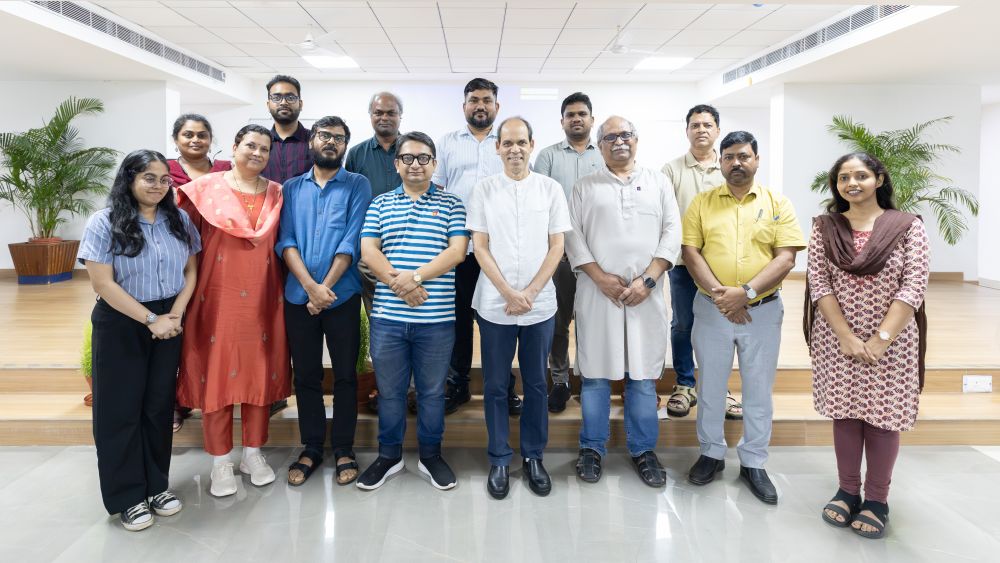
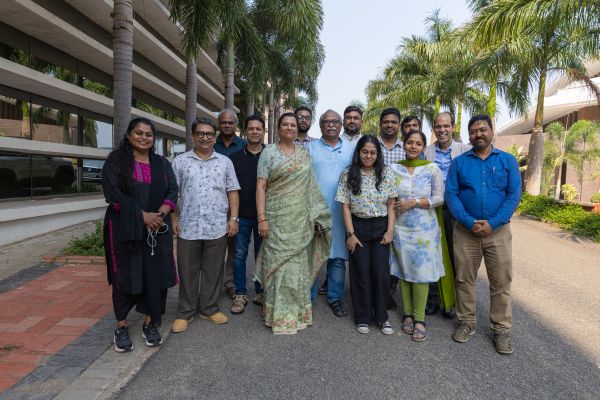
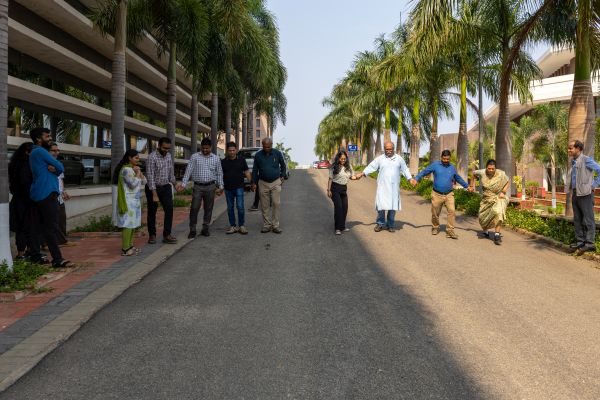
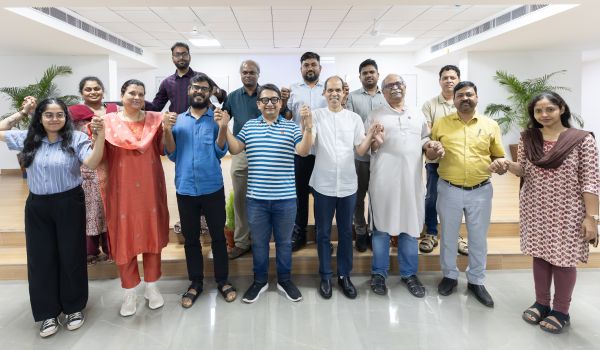
The group picture symbolizes interconnectedness and collective coexistence, where each individual contributes to a larger ecosystem of learning and regeneration. Beyond togetherness, it reflects interdependence, shared energies, and the understanding that meaningful transformation emerges through collaboration, mutual presence, and connections that transcend individual boundaries.
Center for All Interacting Evolving Systems Science
"In a world spiraling toward polycrisis, regenerative science isn't optional — it's the operating system we've been missing.”
Prof Amar KJR Nayak, Professor, Xavier Institute of Management, Bhubaneswar
"Sustainability draws a balance. Regeneration creates a future."
Dr Tathagat Chatterjee, Professor, Urban Management and Governance, XIM University